# Crafting the Nashville Sound: Inside a Master Luthier’s Workshop
***
## Section 1: The Sanctuary of Sound: An Introduction to the Luthier and Their Craft
The air in Elias Vance’s workshop doesn’t just hang; it hums. It’s a thick, fragrant atmosphere, a complex chord played by the elements of his craft. The dominant note is wood—dozens of species, each with its own spectral signature. There’s the spicy, cinnamon-like perfume of mahogany, the dry, chocolatey scent of East Indian rosewood, and the sharp, clean fragrance of Sitka spruce, reminiscent of a Pacific Northwest forest after a rain. Beneath this woody symphony, a subtle harmony of other scents plays out: the sweet, almond-like aroma of hide glue warming in its pot, the metallic tang of steel filings, and the faint, vanilla whisper of nitrocellulose lacquer curing in a distant corner. This isn’t just a workshop; it’s a sensory archive, a place where the raw materials of music marinate in an environment of pure potential.
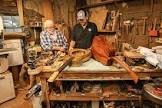
Sunlight, thick with dancing dust motes, streams through a large, north-facing window, illuminating the beautiful chaos within. This is no sterile factory floor. It’s a luthier’s den, a space that feels both meticulously organized and organically evolved. Racks of raw lumber, marked with cryptic chalk notations, line one wall, their stacked ends resembling a library of silent stories waiting to be told. Along another wall, dozens of wooden forms—the hollow outlines of dreadnoughts, orchestra models, and concert jumbo guitars—hang like ancient shields, each one a mold for future melody.
Workbenches, their surfaces scarred with the hieroglyphs of a thousand cuts, gouges, and measurements, are strewn with the arcane tools of the trade. Hand planes of polished brass and rosewood sit next to Japanese pull saws with impossibly fine teeth. Chisels and gouges, their edges honed to a fearsome sharpness, are arranged in felt-lined trays. Calipers, micrometers, and strange, custom-made jigs speak to a profession that is equal parts art, science, and obsessive precision. And everywhere, there are curls of shaved wood—translucent ribbons of spruce, dark commas of ebony—piled like offerings on the floor.
At the center of this sacred space stands Elias Vance himself. He’s a man in his late sixties, with hands that seem to be extensions of the wood he works. They are strong, calloused, and etched with fine lines of sawdust and stain, yet they move with the delicate grace of a surgeon. His eyes, framed by wire-rimmed glasses, hold the patient, focused intensity of someone who measures his work not in hours or days, but in micrometers and musical cents. He’s not just building guitars; he’s midwifing them, coaxing a voice from the silent heart of the wood.
“Every piece of wood has a song inside it,” Elias says, his voice a low, gentle rumble that seems to be absorbed by the timber-lined walls. He runs a hand over a “billet” of Bearclaw Sitka spruce, a piece of wood with a unique, rippling grain pattern. “My job isn’t to *put* the music in. It’s to get everything else out of the way so the wood can sing its own song. That’s the whole secret, right there.”
This philosophy is the soul of lutherie, an ancient craft that marries woodworking with acoustics, engineering with artistry. The word “luthier” comes from the French word for lute, *luth*, and for centuries, these artisans have been the architects of the world’s stringed instruments. While the world outside thrums with digital production and mass manufacturing, the luthier’s workshop remains a bastion of the analog, the tangible, and the deeply personal. In an age of disposable goods, a handmade guitar is an anomaly—a functional work of art intended to last for generations, its voice growing richer and more complex with every passing year. It is a legacy instrument, a physical connection between the maker, the musician, and the music they create together.
The mystique of a handmade instrument is undeniable. It’s the knowledge that a single pair of hands guided every step of its creation, from selecting the raw timber to stringing it up for the first time. It’s the subtle imperfections that betray its human origin—a slight asymmetry in the hand-carved rosette, the visible scribe lines of a dovetail neck joint. These are not flaws; they are fingerprints of the creator, marks of authenticity that a factory-produced instrument, no matter how perfect, can never replicate. This is a world away from the CNC machines and automated assembly lines of major manufacturers. Here, the most important tools are intuition, experience, and a profound, almost mystical, understanding of the materials. Elias Vance doesn’t just know the *properties* of wood; he knows its *personality*. He understands that a piece of mahogany from Honduras will behave differently than a piece from Africa, that the stiffness-to-weight ratio of Adirondack spruce requires a different bracing pattern than a softer Engelmann top.
This deep knowledge is not learned from books alone. It is accumulated over a lifetime of practice, of trial and error, of listening intently to the whisper of the wood. It’s a tradition passed down through generations, a form of alchemy where the luthier acts as the catalyst, transforming inert organic matter into a vibrant, resonant vessel for human expression. And there is perhaps no better place on earth to practice this alchemy than here, in Nashville, Tennessee—Music City, USA. This is a town built on the sound of the guitar, a place where the instrument is not just a tool, but the very lingua franca of its culture. It’s here, in this small, dusty workshop, that the legendary Nashville Sound is not just recorded or performed, but born from the raw elements of nature, shaped by the hands of a master.
***
## Section 2: From Timber to Tone: The Methodical Alchemy of a Handmade Guitar
The creation of a handmade guitar is not a single event, but a long, patient journey. It’s a process governed by the seasons of the wood, the humidity in the air, and the unwavering hand of the craftsman. For Elias Vance, each guitar begins not with a blueprint, but with a conversation. A musician will enter his shop, sometimes a world-famous star, other times a local songwriter, and they will talk—not just about specifications, but about *feeling*. What sound are they chasing? Is it a dry, woody thump for old-timey rhythm playing? A shimmering, overtone-rich voice for delicate fingerstyle? A powerful, cannon-like projection that can cut through a bluegrass jam? This initial dialogue is the true genesis of the instrument. The wood, the body shape, the bracing, every subsequent decision flows from this quest for a specific tonal character.
Let’s follow Elias as he embarks on this journey, building one of his signature Orchestra Model guitars—a versatile instrument favored by fingerstyle players and singer-songwriters for its balance and clarity.
### **Chapter I: The Wood and the Whisper – Selection and Preparation**
The process begins in the wood library, a climate-controlled room at the back of the shop. Here, stacks of timber have been patiently aging for years, some for decades. Stability is paramount. Wood is a hygroscopic material, meaning it absorbs and releases moisture from the air, causing it to swell and shrink. To build a stable guitar, the wood must first reach a state of equilibrium with its environment. Elias uses a moisture meter, a small device with two sharp prongs, to check the wood, aiming for a consistent moisture content of around 6-7%.
For the soundboard—the “top” of the guitar and arguably the most critical component for tone—Elias selects a magnificent set of master-grade **Adirondack Spruce**, often called “Red Spruce.” Known for its incredible stiffness-to-weight ratio, it offers a high volume ceiling and a rich, complex tone that opens up beautifully over time. He holds the two bookmatched halves up and thumps them with his finger, a technique known as *tap tuning*.
> “You hear that?” he asks, his ear close to the wood. “It’s not just a dull thud. There’s a clear, ringing pitch. A good top will ring like a bell even before it’s a guitar. This one… this one wants to be loud. It has a real bold character.”
*Bookmatching* is the process of slicing a single, thick board of wood into two thinner sheets and then opening them up like a book. This creates a visually stunning symmetrical grain pattern down the center of the guitar and, more importantly, ensures that the physical properties of the top are as uniform as possible across its entire surface.
For the back and sides, he chooses a set of **Honduran Mahogany**. While exotic woods like Brazilian Rosewood are legendary (and now heavily restricted by [CITES regulations](https://cites.org/eng/app/appendices.php)), mahogany offers a fundamentally different tonal palette. It’s known for its strong midrange, its dry, woody warmth, and its direct, uncluttered voice. It records beautifully and complements the human voice, making it a favorite for songwriters.
The neck will also be carved from a solid billet of Honduran Mahogany for its strength, stability, and relatively low weight. For the fretboard and bridge, he selects a piece of jet-black **Ebony**, a dense, hard wood that provides a bright, crisp attack to the notes and is incredibly durable, capable of withstanding decades of finger and string wear.
Here’s a simplified look at how these tonewoods compare:
| Tonewood | Primary Use | Common Tonal Characteristics |
| :— | :— | :— |
| **Sitka Spruce** | Top | Strong fundamental, wide dynamic range, versatile. The workhorse of acoustic tops. |
| **Adirondack Spruce** | Top | High volume ceiling, complex overtones, takes time to “open up.” A bluegrass favorite. |
| **Cedar** | Top | Warm, lush, responsive to a light touch. Popular for fingerstyle and classical guitars. |
| **Mahogany** | Back, Sides, Neck, Top | Strong midrange focus, woody, “dry” sound. Excellent for recording. |
| **East Indian Rosewood** | Back & Sides | Deep lows, shimmering highs, scooped midrange. Rich, complex overtones. |
| **Maple** | Back & Sides | Bright, focused tone with rapid note decay. Often used in archtops and jumbos. |
| **Koa** | Back, Sides, Top | Combines the midrange of mahogany with the brightness of maple. Visually stunning. |
Once selected, the wood is brought into the main workshop, which is meticulously kept at a stable 45% relative humidity. The top, back, and side pieces are thicknessed using a combination of a specialized sanding machine and hand planes, with Elias checking the thickness constantly with calipers. The top might end up around 2.8mm thick, the back slightly thicker, but these are not fixed numbers. Elias is feeling the wood’s stiffness, sanding and scraping until it feels *right*. This intuitive, tactile process is something no machine can replicate.
### **Chapter II: The Body of the Song – Bending, Bracing, and Boxing Up**
This is where the flat pieces of wood begin their transformation into a three-dimensional, resonant chamber.
**1. Bending the Sides:** The mahogany side pieces, thicknessed to a little over 2mm, are spritzed with water and placed into a heated side-bending jig. A combination of heat, moisture, and gentle pressure coaxes the rigid wood to relax its fibers and take on the sensuous curves of the guitar’s waist and bouts. It’s a tense process; too much force, and the wood will crack. Too little heat, and it won’t hold its shape. Elias works by feel and smell, knowing the wood is ready when it gives off a specific, almost caramelized scent. Once bent, the sides are clamped into the guitar’s form to cool and set.
**2. The Soul of the Soundboard: Bracing:** While the sides cool, Elias turns his attention back to the Adirondack spruce top. A guitar top is not strong enough on its own to withstand the immense tension of the strings (upwards of 180 pounds for a steel-string acoustic). It needs to be reinforced, but in a way that allows it to vibrate freely and efficiently. This is the function of the braces—small, lightweight struts of spruce glued to the underside of the top.
The bracing pattern is one of a luthier’s most important signatures. The most common pattern for steel-string guitars is Martin Guitars’ famous **[X-brace](https://www.martinguitar.com/martin-story-bracing.html)**, developed in the 19th century. Elias uses a variation of this pattern, but the real magic is in how he carves the braces. This is called *scalloping*. Using a small chisel, he carefully removes wood from the braces, tapering their ends and arching their centers.
> “Think of it like tuning a drumhead,” he explains, holding the braced top up and tapping it again. The sound is now lower in pitch but has a longer, more resonant sustain. “Every shaving I take off changes the resonant frequency. I’m trying to lower the top’s fundamental resonance without compromising its structural integrity. I’m tuning the *air*, not just the wood.”
He shapes each brace by hand, listening, feeling the flex, until the entire top assembly is a unified, springy diaphragm, ready to pump air and create sound. The back is braced as well, though its primary function is more structural and reflective, bouncing the sound waves generated by the top back out through the soundhole.
**3. Closing the Box:** With the top and back braced, it’s time to assemble the body. Kerfing—thin, flexible strips of wood with slots cut in them—is glued along the inside top and bottom edges of the bent sides. This provides a wider gluing surface for attaching the top and back. The neck block (at the top) and tail block (at the bottom) are glued in, completing the rim of the guitar body.
Using dozens of “spool” clamps, Elias carefully glues the back onto the sides. The next day, he repeats the process for the top. For the first time, the disparate pieces of wood are a single, hollow body. The “box is closed.” It is a moment of profound transformation. The object on the bench now looks, for all intents and purposes, like a guitar. And for the first time, it has a resonant voice, a hollow, percussive *thump* that hints at the musical potential locked within.
### **Chapter III: The Player’s Connection – The Neck and Fretboard**
If the body is the guitar’s lungs and voice, the neck is its heart and soul—the primary point of contact for the musician. Crafting a neck that feels like a natural extension of the player’s hand is a sublime art.
**1. The Truss Rod:** Elias begins with the mahogany neck blank. He cuts a channel down its center and installs a **[two-way adjustable truss rod](https://www.stewmac.com/tonewoods/truss-rods/)**. This metal rod is crucial for counteracting the forward pull of the strings and allowing for fine adjustments to the neck’s “relief” (a very slight, intentional up-bow) throughout the guitar’s life.
**2. Carving the Profile:** This is where pure sculpture takes over. Using a rasp, a file, and a spokeshave, Elias begins to remove wood, shaping the blocky blank into a comfortable neck profile. He doesn’t rely on measurements here; he relies on his hands. He closes his eyes, feeling the curve, the transition from the “C” shape down by the nut to the flatter profile up towards the body. He’s crafting for ergonomics, for a feel that is fast, comfortable, and utterly inviting.
**3. The Fretboard:** While the neck is being shaped, the ebony fretboard is meticulously prepared. It is cut to the correct scale length—the distance from the nut to the saddle, which determines the location of the frets. For this guitar, Elias uses a 25.4-inch scale. Using a precision template and a specialized saw, he cuts the fret slots. The accuracy required here is staggering; an error of even a fraction of a millimeter can throw the instrument’s intonation completely off.
The fretboard is then *radiused*, meaning a slight convex curve is sanded across its width. This makes playing chords, especially barre chords, more comfortable. Elias also meticulously inlays small abalone dot markers for position guides—a delicate process of routing a small cavity and setting the inlay flush with the wood.
**4. Fretting:** The frets themselves—lengths of nickel-silver fretwire with a “tang” that fits into the slots—are hammered or pressed into place. This is one of the most critical stages for playability. Each fret must be perfectly seated with no rocking or high spots. After they are all installed, Elias performs an exhaustive process of *fret leveling, crowning, and polishing*. He levels the frets with a long, flat beam, ensuring they are all the exact same height. Then, using a special file, he re-rounds, or “crowns,” the top of each fret, so the string makes contact with a single, precise point. Finally, he polishes them with progressively finer grits of sandpaper and steel wool until they gleam like mirrors. Silky-smooth, perfectly level frets are the hallmark of a high-end, handmade instrument.
**5. Joining Body and Soul: The Neck Joint:** The final step is to join the neck to the body. Elias uses a traditional, hand-cut **dovetail joint**. This is a complex, interlocking joint that creates an incredibly strong, stable connection, transferring vibrational energy between the neck and body with maximum efficiency. Cutting this joint requires immense skill; it must be so precise that it holds together with friction alone, even before any glue is applied. A perfect fit here is crucial for the guitar’s overall tone and sustain.
### **Chapter IV: The Final Veil – Finishing and Final Assembly**
The guitar is now fully assembled “in the white”—bare, unadorned wood. The final stages will protect the instrument and bring its aesthetic beauty to the forefront.
**1. The Art of the Finish:** The choice of finish has a significant impact on an instrument’s tone. A thick, heavy finish can dampen vibrations and choke the sound. Elias prefers a traditional **nitrocellulose lacquer**, the same type of finish used on vintage guitars from the golden era. “Nitro,” as it’s known, is notoriously difficult to work with. It’s toxic, flammable, and requires many thin coats applied over several weeks. But its virtues are legendary. It’s a very thin, hard finish that allows the wood to breathe and resonate freely. It also ages beautifully, developing a fine web of “checking” or cracks over decades, a prized characteristic for vintage enthusiasts.
Elias spends days meticulously sanding the entire guitar, working his way up to an ultra-fine grit, ensuring the surface is perfectly smooth. Then, in a dedicated, ventilated spray booth, he applies coat after painstaking coat of lacquer. Between every few coats, he lets it cure, then wet-sands it to level the surface. The entire process can take over a month. After the final coat has fully cured, he begins the final buffing process, using various compounds to bring the finish to a deep, lustrous, glass-like sheen.
**2. The Bridge and Setup:** The ebony bridge is glued to the top in a precise location determined by the scale length. This is another high-stress area, as the bridge transfers all the string energy directly to the soundboard. Elias carves a saddle and a nut from bone, a material prized for its density and low friction. The slots in the nut are filed to the exact depth and spacing for optimal playability and string alignment.
Finally, the tuning machines are installed, and for the very first time, the guitar is strung up to pitch.
But it is not yet finished. The final step is the *setup*. This is the meticulous process of adjusting the truss rod, saddle height, and nut slot depth to achieve the perfect “action”—the height of the strings off the frets. It’s a delicate balance between low, comfortable action and avoiding any unwanted string buzz. He also fine-tunes the saddle to perfect the guitar’s **[intonation](https://www.sweetwater.com/insync/intonation-what-is-it-and-why-does-it-matter/)**, ensuring that the instrument plays in tune all the way up the neck.
Elias strums a simple G chord. The sound that fills the workshop is astonishing. It’s no longer a collection of wooden parts; it’s a living, breathing voice. It’s rich, complex, and filled with the character of the Adirondack and Mahogany. It is the culmination of hundreds of hours of labor, a lifetime of experience, and a deep reverence for the materials. The song that was locked inside the wood is finally, and gloriously, set free.
***
## Section 3: The Nashville Note: How Music City Shapes the Wood and Wire
You cannot separate the luthier from their environment, and in Nashville, that environment is a crucible of musical ambition, tradition, and innovation. A guitar built in Elias Vance’s workshop is not just an instrument; it’s a Nashville instrument. It is born of the city’s unique sonic demands, shaped by the needs of the world-class musicians who call this town home, and infused with the spirit of the music that echoes from the Ryman Auditorium to the Bluebird Cafe to the countless recording studios on Music Row.
The influence of Nashville on Elias’s craft is not a single, definable thing. It’s a confluence of pressures, expectations, and collaborations that subtly guides his hands and ears. It’s the difference between building a guitar that sounds good in a quiet room and building one that sounds *right* under a studio microphone or on a festival stage.
### **The Anatomy of the “Nashville Sound”**
The term “Nashville Sound” can be a bit of a moving target, historically referring to a specific style of country music production from the 1950s. But in the context of a modern acoustic guitar, it has evolved to mean a certain set of tonal ideals. When a session player in Nashville picks up a guitar, they are typically looking for:
* **Clarity and Articulation:** In a dense mix with vocals, bass, drums, pedal steel, and fiddle, a guitar needs to be heard without being overbearingly loud. This means a tone with excellent string-to-string separation, where each note in a chord rings out distinctly. Elias achieves this through careful bracing, ensuring the top is responsive but controlled, avoiding a “muddy” or “woofy” bass that can clutter a recording.
* **Balance:** The guitar must be balanced across the entire tonal spectrum—from a tight, present bass to a warm, vocal-like midrange and a sweet, shimmering treble. An instrument that is too “scooped” in the mids or too “brittle” on the high end simply won’t work. This is why a wood combination like Mahogany and Adirondack Spruce is so popular here; it delivers that powerful, direct midrange that sits perfectly in a track.
* **Dynamic Range:** A Nashville session musician is a master of dynamics. They need an instrument that can respond to the lightest touch for a delicate ballad intro, but also one that can be strummed hard for a driving chorus without “breaking up” or losing its composure. The headroom of an Adirondack top is a huge asset here, allowing a player to dig in without the tone compressing or sounding harsh.
* **Recording Prowess:** Above all, the guitar must sound *phenomenal* through a microphone. This is a different quality than simply sounding good to the player’s ear. It’s about how the overtones translate, how the low-end frequencies are managed, and how the guitar’s voice blends with other instruments. Elias often talks about building a guitar with a “built-in EQ.”
> “A great studio guitar doesn’t fight the recording engineer,” Elias notes, wiping down a finished instrument. “It gives them a perfect canvas to work with. It has the fundamentals, the warmth, and the sparkle, all in the right place. The engineer’s job becomes about capturing that, not fixing it.”
### **The Player as the Blueprint: Customization for the Working Musician**
The demands of Nashville’s musicians go far beyond tone. These are players who might spend eight hours a day in a studio, then play a three-hour gig at night. Their instruments are their primary tools, and they need to be flawless, reliable, and comfortable. This is where the collaborative nature of Elias’s work truly shines.
* **Playability is King:** While a collector might prize exotic woods, a working player prizes a neck that feels like it was made for their hand. Elias will meticulously document a player’s preferred neck dimensions: the nut width, the string spacing, the profile shape, the fretboard radius. He might incorporate a “compound radius,” where the fretboard is rounder near the nut for comfortable chording and flattens out higher up the neck for easier bending and soloing.
* **The “Cutaway” Conundrum:** Many Nashville players, especially those who play intricate lead lines, require easy access to the upper frets. This has led to the popularity of the **cutaway** body style (either the rounded Venetian or the sharp Florentine). For a traditionalist like Elias, cutting a piece out of the guitar’s body is a significant structural and acoustic compromise. He has spent years refining his cutaway designs to minimize the impact on the instrument’s internal air volume and resonant properties, ensuring that the enhanced playability doesn’t come at too great a tonal cost.
* **The Pickup Question:** In the 21st century, virtually every working musician needs their acoustic guitar to be stage-ready. This means installing an electronic pickup system. This presents another challenge for the luthier. Drilling holes in the bridge and side of a finely crafted acoustic instrument can feel like sacrilege. Elias works closely with players to select and install the least invasive, most natural-sounding pickup systems, like the [L.R. Baggs Anthem](https://www.lrbaggs.com/pickups/anthem-acoustic-guitar-pickup-and-microphone) or various K&K Sound transducer systems. His goal is to amplify the true acoustic sound of the guitar, not to replace it with a synthetic “plugged-in” tone.
* **Durability and Stability:** A touring guitar lives a hard life. It’s subjected to changes in temperature and humidity as it travels from a dry tour bus to a humid outdoor festival. Elias builds his guitars with this reality in mind. He uses modern glues with superior sheer strength, meticulously fits every joint, and ensures the finish is robust enough to handle the rigors of the road. His reputation is built not just on how his guitars sound on day one, but on how they hold up after a thousand shows.
### **The Nashville Ecosystem: A Community of Craft**
Elias Vance does not work in a vacuum. He is part of a vibrant, interconnected community of craftspeople, musicians, and aficionados that makes Nashville unique. This ecosystem creates a feedback loop of constant improvement and inspiration.
* **The Legendary Repair Shops:** Nashville is home to some of the world’s most renowned guitar shops and repair centers, like the iconic [Gruhn Guitars](https://guitars.com/) and [Carter Vintage Guitars](https://cartervintage.com/). Elias has deep relationships with the master repair technicians at these shops. They are the “doctors” who see every conceivable issue a guitar can have. They share knowledge about common structural failures, the long-term effects of different construction methods, and the evolving preferences of players. This practical, real-world feedback is invaluable, informing Elias’s own building techniques.
* **The Session Scene:** A finished guitar from Elias’s shop might find its way onto a dozen different hit records within its first year. He often gets calls from producers and engineers, marveling at how easily a particular instrument sat in a mix. This constant, high-level use of his creations provides the ultimate test of their quality. It’s one thing to build a guitar that sounds good to him; it’s another to build one that satisfies the golden ears of Nashville’s A-list producers.
* **A Brotherhood of Builders:** While they are technically competitors, there is a deep sense of camaraderie among the small community of high-end luthiers in and around Nashville. They share sources for rare wood, discuss new finishing techniques, and sometimes even pass clients to one another if a particular builder’s style is a better fit for a musician’s needs. This spirit of shared passion elevates the craft for everyone involved.
Consider a story Elias tells, a perfect illustration of the Nashville effect. A few years ago, a well-known flatpicking guitarist came to him with a problem. He loved the powerful, bass-heavy sound of his vintage dreadnought for bluegrass jams, but in the studio, it was just too boomy. It was a classic Nashville dilemma: the need for an instrument that could wear multiple hats.
> “We talked for hours,” Elias recalls. “He needed that dreadnought power, but with the clarity of a smaller-bodied guitar. It was a contradiction. So, we designed an instrument together. We used a Dreadnought body shape for the air volume, but we made it slightly shallower to control the bass. We went with Mahogany back and sides for that midrange punch, and an Adirondack top braced for articulation rather than pure volume. We scalloped the X-braces, but left the tone bars a little beefier to keep the top tight. The result was a cannon that was also a scalpel. It had the power, but every note had its own space. That guitar was born out of a very specific Nashville problem.”
That instrument, a unique synthesis of player need and luthier ingenuity, is the Nashville Note personified. It’s a sound forged in the intersection of tradition and the relentless demands of the modern music industry, a testament to how this singular city continues to shape the very wood and wire of its most iconic instrument.
***
## Section 4: A Legacy in Six Strings: The Finished Instrument and the Future of the Craft
After weeks of patient, focused labor, the moment of completion arrives. The final buffing compound is wiped away, the strings are stretched and tuned, and the Orchestra Model guitar rests in its stand, gleaming under the workshop lights. It is no longer a project; it is an entity. The air around it seems to shimmer with a new energy. To see it is to appreciate its physical beauty—the deep, chatoyant grain of the Honduran Mahogany, the flawless symmetry of the bookmatched Adirondack top with its subtle “bearclaw” figuring, the stark, elegant black of the ebony fretboard against the abalone inlays.
But to truly understand it, you have to pick it up.
The first thing you notice is the weight and balance. It feels alive in your hands, substantial but not heavy, the neck settling into your palm as if it were custom-molded. The nitrocellulose finish is not a thick, plastic-like shell; it’s a thin, organic skin that feels smooth and resonant, allowing you to feel the vibration of the wood directly. The smell is intoxicating—that faint, sweet vanilla of the lacquer mingling with the deep, earthy scent of the tonewoods.
And then, you play a chord.
The sound is immediate, explosive, and three-dimensional. It doesn’t just come from the soundhole; it seems to emanate from the entire body of the instrument, radiating into the room and vibrating against your chest. The bass is present and clear, not a muddy rumble but a defined, musical low end. The midrange is warm and articulate, giving the guitar its vocal quality. And the trebles… they are the true revelation. They don’t “ping” or “plink”; they *bloom*. Each note has a solid fundamental followed by a halo of complex, shimmering overtones. It’s a sound that is simultaneously powerful and delicate, a voice capable of whispering a gentle melody or shouting a percussive rhythm. This is the culmination of every decision Elias Vance made, from the first tap on a raw billet of spruce to the final polish of the frets.
### **The Handover: A Beginning, Not an End**
Soon, the musician who commissioned this guitar will arrive. This moment, for Elias, is more nerve-wracking than cutting a dovetail joint or bending a fragile piece of rosewood. The handover is not a simple commercial transaction. It’s the transfer of a legacy. It is the moment his creation stops being *his* and starts belonging to the music.
He watches as the musician picks up the guitar, their own hands—the hands that will write songs and play shows with this instrument—exploring its contours for the first time. They play a few chords, then a scale, then a fragment of a song. A slow smile spreads across their face. This is the ultimate validation. It is the closing of one circle and the beginning of another. The guitar has found its partner, and its true life is about to begin. It will be a faithful companion in quiet writing sessions late at night, a trusted tool on brightly lit stages, and a precise voice in the sterile confines of a recording studio. Its surface will acquire scratches and dings—what players affectionately call “mojo”—each one a scar from a story, a map of its musical journey. Its voice will slowly change, the wood crystallizing and opening up over years of being played, the tone growing ever deeper and more complex.
This relationship between the luthier and the musician is a sacred trust. The musician trusts the luthier to build an instrument that can be a transparent conduit for their art. The luthier, in turn, trusts the musician to take their creation out into the world and fill it with music, to give it the purpose for which it was so painstakingly made.
### **The Horizon of Lutherie: Challenges and Innovations**
The world of lutherie, for all its timeless tradition, is not static. Elias Vance and his contemporaries face a future filled with both significant challenges and exciting opportunities.
**The Sustainability Crisis:** The single greatest challenge is the dwindling supply of traditional tonewoods. Old-growth Adirondack Spruce, Brazilian Rosewood, and high-quality Mahogany are becoming increasingly rare and expensive due to over-harvesting and deforestation. The entire craft is facing an environmental reckoning.
* **Responsible Sourcing:** Luthiers are at the forefront of promoting sustainable forestry. Many now exclusively use wood certified by organizations like the **[Forest Stewardship Council (FSC)](https://fsc.org/en)** or work with suppliers who specialize in reclaimed timber or salvaging fallen trees.
* **Alternative Tonewoods:** Necessity is the mother of invention. Luthiers are exploring a wide range of alternative and domestic woods that have been historically overlooked. Woods like Ovangkol, Sapele (a sustainable alternative to Mahogany), and Granadillo are gaining popularity. In North America, builders are rediscovering the tonal potential of Walnut, Cherry, and various species of Maple. These woods don’t just mimic the old ones; they offer new and unique tonal palettes for builders and players to explore.
* **Torrefaction:** Technology is also providing solutions. **[Torrefaction](https://www.premierguitar.com/gear/acoustic-gurus-the-whys-and-hows-of-torrefaction)** is a process where wood is heated in a low-oxygen environment, essentially accelerating the aging process. This can give a brand-new guitar top the dry, responsive, and open sound of a vintage instrument that has been played for 50 years.
**The Human vs. The Machine:** The other major pressure comes from the ever-improving quality of factory-built guitars. Companies like Taylor and Martin have invested heavily in precision CNC machinery and advanced manufacturing techniques, allowing them to produce incredibly consistent and high-quality instruments at a fraction of the cost of a handmade one.
How can a solo artisan like Elias compete? By leaning into what makes his work unique:
* **Ultimate Customization:** A factory has to build for the “average” player. Elias builds for an *individual*. He can cater to any request, no matter how esoteric, from a specific neck carve to an unusual scale length to a unique inlay design.
* **The Art of Voicing:** A CNC machine can carve a brace to within a thousandth of an inch of a specification. What it cannot do is listen. It cannot feel the stiffness of a particular piece of wood and decide to leave a brace a little thicker here, or take an extra shaving off there. This process of *voicing*—tuning the components of the guitar to work together in harmony—remains the exclusive domain of the human craftsman. It is the luthier’s “secret sauce,” the reason why two handmade guitars, built to the exact same specs, will still have their own unique personalities.
* **The Story:** When you buy a factory guitar, you buy a product. When you commission a guitar from a luthier, you buy a story. You become part of the instrument’s creation, and it becomes a part of your own artistic narrative. This intangible connection is, for many musicians, priceless.
### **Passing the Torch: The Future of the Craft**
For the craft to survive, the knowledge accumulated by masters like Elias Vance must be passed on. The traditional apprentice model, while still alive, is being supplemented by a growing number of excellent lutherie schools across the world, such as the **[Galloup School of Guitar Building and Repair](https://www.galloupguitars.com/)** in Michigan or the **[Roberto-Venn School of Luthiery](https://www.roberto-venn.com/)** in Arizona. These schools provide a structured, intensive education in the fundamentals of the craft, producing a new generation of talented builders.
The internet has also revolutionized the sharing of knowledge. Online forums, YouTube channels, and social media groups have created a global community of luthiers who can share techniques, debate acoustic theories, and showcase their work. A young builder in a small town can now learn from masters all over the world.
Elias, for his part, has had a few apprentices over the years. He sees it as his duty to the craft that has given him so much.
> “You can’t take this with you,” he says, gesturing around his workshop. “This knowledge doesn’t belong to me. I’m just its steward for a little while. My job is to learn everything I can from the wood, and then to teach someone else how to listen. If I can do that, then my work will live on long after I’m gone.”
### **Coda: The Enduring Harmony**
In a world that moves at the speed of light, the luthier’s workshop is an anchor to something more deliberate, more tangible, more human. It is a reminder that the most profound things are not always the fastest or the most efficient. They are the things built with patience, with passion, and with a deep and abiding respect for the materials.
The guitar, now in its case, is ready to leave the sanctuary where it was born. It will travel to recording studios and stages around the world, its voice becoming part of the vast, ongoing river of music that flows out of Nashville. It will be the catalyst for new songs, the comfort for a lonely songwriter, the thunder in a sold-out arena.
And back in the workshop, amidst the fragrant dust and the beautiful chaos, Elias Vance will pick up two new pieces of wood. He will hold them up, tap them gently, and lean in close, listening for the first faint whisper of the next song waiting to be set free. The hands that build the harmony will begin their work once more.