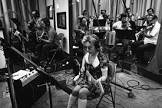
Music City’s Unsung Architects: The Session Players Behind the Hits
You know the songs. You’ve sung them in your car, heard them at weddings, and felt their melodies etch themselves into the soundtrack of your life. It might be the haunting piano intro to Patsy Cline’s “Crazy,” the chicken-pickin’ guitar lick that kicks off Alan Jackson’s “Chattahoochee,” or the thunderous drum fill that launches Carrie Underwood’s “Before He Cheats.” These are iconic moments in music history, inseparable from the songs themselves. But who played them? The answer, more often than not, is not the star on the album cover.
Welcome to the hidden world of the Nashville session musician. They are the sonic architects, the musical mercenaries, the unsung heroes who have built Music City’s empire of hits, note by note, hook by hook. They are the players who can walk into a studio at 10 AM, having never heard a song before, and by lunchtime, have crafted a part so perfect it becomes legendary. They are the secret weapon behind everyone from Elvis Presley and Bob Dylan to Garth Brooks and Taylor Swift.
This is the story of those architects. It’s a journey through the smoky studios of Music Row’s golden age, a look inside the high-tech recording booths of the 90s country boom, and a glimpse into the future of a role that continues to define the sound of popular music. It’s time to meet the men and women who made the music you love, even if you never knew their names.
Section 1: The Blueprint: Defining the Nashville Session Player and the Rise of Music Row
Before a skyscraper can touch the clouds, an architect must draw a blueprint. Before a hit record can climb the charts, a session player must lay the foundation. The Nashville session musician is a unique breed, a product of a specific time, place, and system that transformed a sleepy Southern city into the songwriting and recording capital of the world. To understand their impact, we first need to understand their world—the world of Music Row, and the unique musical language they created to build it.
What Makes a Session Player? The Art of Instant Genius
So, what exactly is a session player? In the simplest terms, a session musician—or “session cat,” in the classic Nashville vernacular—is a freelance musician hired to perform on recording sessions. Unlike a member of a touring band who plays the same songs night after night, a session player’s job is defined by its constant variety and immense pressure. They are specialists, masters of their craft called in for a specific purpose: to make a song the best it can be, right here, right now.
The required skillset is staggering:
- Technical Virtuosity: They must be absolute masters of their instrument(s). There’s no time for fumbling. They need to execute complex parts flawlessly, often on the first or second take.
- Extreme Versatility: A session player might record a tear-in-your-beer country ballad in the morning, a rockabilly stomper in the afternoon, and a gospel hymn in the evening. They need to be a sonic chameleon, able to authentically inhabit any style thrown at them.
- Speed and Efficiency: Studio time is money—big money. Session players are hired for their ability to work fast. They listen to a new song, chart it out, and come up with a killer part, all in a matter of minutes.
- Creativity Under Pressure: This is perhaps their most magical quality. They aren’t just human jukeboxes playing notes on a page. They are arrangers and composers in their own right, inventing the signature licks, hooks, and grooves that make a good song a timeless hit. That iconic bass line? That unforgettable guitar solo? Chances are, a session player came up with it on the spot.
- Anonymity and Ego-Free Collaboration: The job is to serve the song and the artist, not to show off. They must be able to collaborate, take direction from producers, and contribute ideas without needing the spotlight. Their name might be buried in the liner notes (if they’re lucky), but their sound is front and center.
It is this unique combination of technical prowess, creative instinct, and professional humility that defines the session musician. They are the ultimate musical problem-solvers.
The Secret Language: Cracking the Nashville Number System
How do these players work so fast? How can a group of musicians who have never met create a perfectly tight arrangement of a brand-new song in under an hour? The answer lies in a revolutionary musical shorthand: The Nashville Number System.
Forget complex sheet music with its treble clefs, key signatures, and endless notation. The Number System is a beautifully simple, yet profoundly powerful, method of transcribing music. Developed in the 1950s by Neal Matthews, Jr. of The Jordanaires and further refined by bandleader Charlie McCoy, it became the lingua franca of Music Row.
Here’s the basic concept: Instead of naming chords (like G, C, and D), the system assigns a number to each chord based on its position in the scale. In any given key, the “home” chord (the tonic) is always 1. The other chords are numbered relative to it.
Let’s take the key of G as an example:
| Number | Chord in Key of G | Chord in Key of C | Chord in Key of A |
|---|---|---|---|
| 1 | G Major | C Major | A Major |
| 2 | A minor | D minor | B minor |
| 3 | B minor | E minor | C# minor |
| 4 | C Major | F Major | D Major |
| 5 | D Major | G Major | E Major |
| 6 | E minor | A minor | F# minor |
| 7 | F# diminished | B diminished | G# diminished |
A songwriter can walk into the studio and say, “Boys, it’s a simple 1-4-5 progression.” Every musician in the room instantly knows the fundamental structure of the song, regardless of the key. If the singer then says, “That’s a little high for me, let’s take it down from G to E,” no one has to transpose complex notation. The numbers stay the same (1-4-5); only the tonal center changes. It’s a system built for speed and flexibility, allowing for on-the-fly key changes and arrangement tweaks without missing a beat.
A number chart is elegantly simple, showing the chords for each measure, with special symbols to denote pushes, holds, or unique rhythms. It provides the skeleton, leaving room for the players to add the flesh and blood—the creative licks and fills that bring the song to life. This system was the engine that powered the Nashville hit factory.
The Birth of a Mecca: The Rise of Music Row
The session player ecosystem couldn’t have existed without a place to call home. That home was Music Row. In the years following World War II, Nashville began its transformation. It had always been a hub for music publishing and home to the influential Grand Ole Opry radio show, but the recording industry was still in its infancy.
The game changed in 1954 when brothers Owen and Harold Bradley bought a house at 804 16th Avenue South and, with the help of RCA Records, converted its basement into a studio. A year later, they built a Quonset hut army surplus building in the backyard, creating the legendary Quonset Hut Studio. This was the first major studio on what would become Music Row. It was a place of magic, where hits like Brenda Lee’s “I’m Sorry,” Patsy Cline’s “Walkin’ After Midnight,” and Bobby Vinton’s “Blue Velvet” were born.
In 1957, RCA Records, under the guidance of visionary producer and guitarist Chet Atkins, decided to build its own state-of-the-art studio just down the street. This became RCA Studio B, the “Home of 1,000 Hits.” With its scientifically designed acoustics and cutting-edge technology (for the time), it became a cathedral of sound where Elvis Presley, Dolly Parton, and the Everly Brothers would record some of their most enduring work.
With these two anchor tenants, a music-business gold rush began. Publishers, labels, booking agencies, and management companies all flocked to the area, converting the quiet residential homes of 16th and 17th Avenues South into a bustling industry hub. This concentration of talent and business created the perfect environment for a dedicated class of studio musicians. They could literally walk from a session at the Quonset Hut to another at Studio B, grabbing lunch at a local diner where they’d bump into the very songwriters and producers they were working with. It was a small, tight-knit community fueled by caffeine, creativity, and a relentless work ethic. Music Row wasn’t just a place; it was an ecosystem where hits were conceived, written, recorded, and marketed, all within a few square blocks.
The First Notes: Early Pioneers of the Nashville Session Scene
Before the “A-Team” became a household name (at least within the industry), a generation of trailblazing musicians laid the groundwork. They were the pioneers who defined what a Nashville session player could be, blending country traditions with jazz, pop, and blues influences.
- Chet Atkins: Known as “Mr. Guitar,” Atkins was more than just a player; he was an architect of the entire Nashville Sound. As a producer and head of RCA Nashville, he hired the core group of session players. But as a guitarist himself, his sophisticated, fingerstyle technique and impeccable taste graced countless records, setting a new standard for country guitar.
- Hank “Sugarfoot” Garland: A jazz prodigy with lightning-fast fingers, Garland brought a level of technical sophistication to the guitar that was unheard of in early country music. His work on records like Elvis Presley’s “Little Sister” and Patsy Cline’s “I Fall to Pieces” is a masterclass in melodic invention.
- Grady Martin: A true chameleon, Grady Martin could do it all. He could play sweet, lyrical lines on a countrypolitan ballad or unleash a raw, gritty solo. He is famously credited with accidentally discovering the “fuzz-tone” effect in 1961 during a session for Marty Robbins’ “Don’t Worry” when a transformer in his amplifier’s channel strip blew. Instead of stopping, the producer left it in, and a new sound was born.
- Owen and Harold Bradley: While Owen was primarily a producer and Harold a rhythm guitarist, their role in creating the session scene cannot be overstated. As studio owners and producers, they fostered a creative environment, and as musicians, they were in the trenches, shaping the sound from the ground up.
These early pioneers were the foundation. They established the standards of professionalism, versatility, and creativity that would define the Nashville session player for decades to come. They built the blueprint, and soon, an elite crew of master builders would arrive to construct the golden era of country music.
Section 2: The A-Team and The Nashville Cats: Crafting the Golden Era of Country Music
As Music Row blossomed in the late 1950s and early 1960s, a remarkable phenomenon occurred. A select, unofficial group of session musicians began playing on nearly every major hit coming out of Nashville. They were so skilled, so intuitive, and so in-demand that producers would book them as a unit. If you wanted a hit, you called them. They were known, reverently, as The Nashville A-Team. This was the crew that built the “Nashville Sound,” a polished, pop-friendly style that took country music out of the honky-tonks and into suburban living rooms across America. And alongside them, a slightly funkier, edgier group known as The Nashville Cats would prove that these players could apply their magic to just about any genre imaginable.
The First Call: Assembling the Legendary A-Team
The name “A-Team” was an informal designation, a nod to the fact that they were the “first call” musicians for any important session. There was a B-Team and a C-Team, but the A-Team were the thoroughbreds. Producers like Chet Atkins, Owen Bradley, and Don Law knew that with this crew in the room, they were virtually guaranteed a professional, polished, and often brilliant recording in just a few hours.
The lineup was somewhat fluid, but the core group was a murderer’s row of talent. They developed an almost telepathic chemistry, able to anticipate each other’s moves and weave their individual parts into a seamless, perfect whole. They didn’t just play the songs; they arranged them on the fly, inventing the very hooks that would make them famous.
Profiles in Genius: Meet the Core of the A-Team
To truly appreciate their contribution, you have to know the players. Each member brought a unique voice and skill set to the table, and their individual sounds became the sonic signature of an entire era.
Harold Bradley – The Rhythm King (Guitar)
Often called the “Dean of Nashville Guitarists,” Harold Bradley was the rock-solid foundation of the A-Team. While others played the flashy solos, Harold was the master of rhythm, providing the perfect chordal and rhythmic bed for every song. He is often cited as the most recorded guitarist in history, with his work appearing on a staggering number of hits. His specialty was the “tic-tac” bass, doubling the upright bass line on a Danelectro six-string bass guitar, creating a percussive, defined low end that was a hallmark of the Nashville Sound. His rhythm playing on songs like Patsy Cline’s “Crazy” and Roger Miller’s “King of the Road” is a lesson in understated perfection.
Grady Martin – The Versatile Virtuoso (Guitar)
If Harold was the foundation, Grady Martin was the masterful decorator who could paint in any color. He was the lead guitarist of choice for decades, a true innovator whose influence is still felt today. He could deliver the sweet, tremolo-laden licks on Roy Orbison’s “Oh, Pretty Woman,” the raw, proto-rockabilly energy on Johnny Horton’s “The Battle of New Orleans,” and, as mentioned, the groundbreaking fuzz-tone on Marty Robbins’ “Don’t Worry.” His ability to craft the perfect solo for any song, in any style, made him an indispensable part of the A-Team.
Bob Moore – The Unshakable Foundation (Upright Bass)
Every great building needs a cornerstone, and for the Nashville A-Team, that was bassist Bob Moore. His feel, timing, and note choices were impeccable. He anchored thousands upon thousands of recordings, providing a warm, round, and unerringly groovy foundation. From Elvis Presley’s “Are You Lonesome Tonight?” to Brenda Lee’s “Rockin’ Around the Christmas Tree,” Moore’s bass is the subtle but essential heartbeat of the track. He wasn’t flashy, but his playing was the glue that held everything together, a masterclass in the principle that what you don’t play is just as important as what you do.
Buddy Harman – The Original Groove Master (Drums)
Before Buddy Harman, drums were often an afterthought in country music, sometimes not even used on recordings. Harman changed all of that. He is widely considered the first full-time session drummer in Nashville and, in many ways, invented the art of country drumming. He brought a sense of swing and rock-and-roll energy that propelled records up the charts. Listen to the iconic drum intro on Johnny Cash’s “Ring of Fire” or the relentless shuffle on Patsy Cline’s “Walkin’ After Midnight.” That’s the power and precision of Buddy Harman, a drummer who could make a song dance.
Floyd Cramer – The Master of the “Slip Note” (Piano)
Few instrumentalists have a sound as instantly recognizable as Floyd Cramer. He pioneered a “slip note” or “bent note” style of piano playing, where he would strike a dissonant note just below the melody note and then quickly resolve it, creating a sound that mimicked the graceful slide of a steel guitar. This elegant, crying piano style became a defining feature of the Nashville Sound. His instrumental hit “Last Date” is the quintessential example, but his touch is all over classics like Elvis Presley’s “Heartbreak Hotel” and Patsy Cline’s “Crazy.” His playing was the sound of sophisticated melancholy.
Hargus “Pig” Robbins – The Soul of the Keys (Piano)
While Cramer was known for his elegant polish, Hargus “Pig” Robbins was the master of soulful, blues-inflected piano. Blind since the age of four, Robbins developed an incredible feel and ear for music. He could inject a dose of honky-tonk grit into a George Jones track like “White Lightning” one moment and play a beautiful, sensitive part on a Crystal Gayle crossover hit like “Don’t It Make My Brown Eyes Blue” the next. His versatility and deep musicality made him one of the most beloved and respected players in town for over 50 years.
Pete Drake – The Voice of the Steel (Steel Guitar)
The pedal steel guitar is one of country music’s most emotive instruments, and Pete Drake was its greatest ambassador and innovator. He could make the steel weep on Tammy Wynette’s “Stand By Your Man” or swing with joy on a Charlie Rich tune. But his innovation didn’t stop there. He famously created the “talking steel” or “talk box” effect, using a tube to channel the sound of his guitar into his mouth, allowing him to shape the sound into words. This effect was famously used on his own hit “Forever” and, years later, was borrowed by rock legend Peter Frampton for “Show Me the Way.” He gave the steel guitar a literal voice.
The Jordanaires & The Anita Kerr Singers – The Angelic Chorus (Backing Vocals)
No discussion of the Nashville Sound is complete without mentioning the vocal groups that provided the lush, smooth harmonies. The Jordanaires, a male gospel quartet, are most famous for their work with Elvis Presley on hundreds of songs, including “Don’t Be Cruel” and “Are You Lonesome Tonight?”. The Anita Kerr Singers provided the equally polished female and mixed vocal textures. Together, these groups replaced the traditional “high lonesome” harmony of early country with a sophisticated, pop-oriented sound that was crucial to the crossover appeal of the era’s biggest hits.
Dylan Goes Electric, and Nashville Goes With Him: The Nashville Cats
The A-Team’s brilliance wasn’t confined to country music. In the mid-1960s, a new generation of folk and rock artists began looking to Nashville, not for its country sound, but for its unparalleled musicianship. The most famous of these pilgrims was Bob Dylan.
When Dylan arrived in Nashville in 1966 to record his masterpiece, Blonde on Blonde, he was paired with a group of studio musicians, many of whom were part of or overlapped with the A-Team. These players, later dubbed The Nashville Cats by the Country Music Hall of Fame and Museum, included a slightly younger, often more rock and R&B-influenced group of players.
Key Nashville Cats included:
- Charlie McCoy (Harmonica, Bass, Keys, Trumpet): A multi-instrumental genius, McCoy played the iconic harmonica on many Nashville records but was also a world-class session leader.
- Kenny Buttrey (Drums): Buttrey had a different feel than Harman—a driving, syncopated rock and roll style that perfectly suited Dylan’s new sound. His drumming on “Rainy Day Women #12 & 35” is loose, chaotic, and brilliant.
- Wayne Moss (Guitar): Owner of Cinderella Sound studio, Moss played the legendary, spiraling guitar lick on Roy Orbison’s “Oh, Pretty Woman.”
- Jerry Kennedy (Guitar): A virtuoso who could play anything, Kennedy would go on to become a major producer as well.
The Nashville Cats blew Dylan’s mind. Accustomed to the more methodical New York session scene, he was stunned by their speed, intuition, and raw creativity. They didn’t need elaborate charts or endless rehearsals. Dylan would play them a song once, and they would nail a masterful take moments later. The collaboration was so successful that Dylan returned to record John Wesley Harding and the overtly country-flavored Nashville Skyline, further cementing the city’s reputation as a place where any sound was possible.
A Day in the Life: The Hit Factory at Work
Imagine a typical day for a member of the A-Team in the mid-1960s. It would start with a 10 AM to 1 PM “morning session.” They’d arrive at RCA Studio B, grab a coffee, and gather around the songwriter, who would play a new song on an acoustic guitar. The players would scribble out a quick chart using the Number System. The producer would offer a few suggestions: “Let’s try this one with a shuffle feel,” or “Floyd, give me something pretty on the intro.”
They would run the song down once or twice, with each player spontaneously creating their part. Bob Moore would find the perfect bass pocket. Buddy Harman would lock in with him. Grady Martin might experiment with a guitar lick that becomes the song’s signature hook. Pete Drake would weave in mournful steel swells. After fifteen minutes of this collaborative creation, the red light would go on, and they would record. Often, the keeper take was the first or second one. By 1 PM, they would have recorded three or four potential hit songs.
Then, they’d break for lunch, head down the street to the Quonset Hut for the 2 PM to 5 PM “afternoon session,” and do it all over again with a different artist. Then came the 6 PM to 9 PM “evening session,” and sometimes even a late-night session after that. They were musical athletes, performing at the highest level, day in and day out. They weren’t just playing music; they were manufacturing the soundtrack of an era at an industrial pace, yet with the soul of true artists.
Section 3: The New Guard: From the ’90s Boom to Today’s Chart-Topping Mavericks
As the polished “Nashville Sound” of the 60s and 70s gave way to the “Urban Cowboy” phase and then the “New Traditionalist” movement of the 80s, the session scene continued to evolve. But it was the early 1990s that marked the next seismic shift. A new generation of stars, led by the unstoppable force of Garth Brooks, blew the doors off country music, transforming it into a commercial juggernaut. This new sound—bigger, bolder, and infused with the energy of stadium rock—demanded a new breed of session player. A new A-Team for a new era.
The Sound Gets Bigger: The Rise of ’90s “New Country”
The country music of the 1990s was a different beast. Artists like Garth Brooks, Alan Jackson, Clint Black, and Travis Tritt sold albums by the millions, filling arenas and dominating the airwaves. The production values soared to match. The sound was slick, powerful, and radio-ready, with driving drums, muscular bass lines, and virtuosic electric guitar solos that owed as much to classic rock as they did to classic country.
This shift required players who could deliver that power while still honoring the genre’s roots. They needed to be able to play a tender ballad one minute and a high-octane barn-burner the next. They needed to be fluent in the language of both Merle Haggard and The Eagles. A new “first call” list emerged, and these players would define the sound of country music for the next two decades.
The Second Generation A-Team: Architects of the Boom
Just like their predecessors, this new group of studio aces developed an incredible chemistry and became the go-to musicians for nearly every major record produced in Nashville. Their names are all over the liner notes of the biggest albums of the era.
Brent Mason – The Modern Guitar Hero (Electric Guitar)
If you’ve listened to country radio at all since 1990, you know the sound of Brent Mason. He is, simply put, one of the most recorded and influential guitarists of his generation. His signature “hot-wired” Telecaster sound, blending lightning-fast chicken-pickin’, bluesy bends, and sophisticated jazz-inflected lines, is legendary. He created some of the most iconic guitar intros in country history.
Iconic Brent Mason Intros:
- Alan Jackson – “Chattahoochee”
- Brooks & Dunn – “My Maria”
- Shania Twain – “Any Man of Mine”
- Trisha Yearwood – “XXX’s and OOO’s (An American Girl)”
Mason’s ability to craft a hook-laden, perfectly executed part in a single take is the stuff of legend. He won the Academy of Country Music’s Guitarist of the Year award a record 12 times.
Paul Franklin – The Steel Innovator (Steel Guitar)
Following in the footsteps of Pete Drake, Paul Franklin took the pedal steel guitar to new heights of technical and musical brilliance. He could play traditional, tear-jerking steel with the best of them, but he also pushed the instrument’s boundaries, incorporating complex chordal work and blistering solos. He was a constant presence on the records of artists like Vince Gill, Alan Jackson, and Mark Knopfler of Dire Straits, who frequently sought out Franklin for his unparalleled taste and skill. His work ensures that the steel guitar remains a vital voice in modern country music.
Eddie Bayers – The Human Groove Machine (Drums)
The powerful sound of ’90s country needed a powerful drummer, and Eddie Bayers was the man for the job. Known for his impeccable timing and a deep, solid “pocket” (the feel of the groove), Bayers laid down the beat for a staggering number of hits. His drumming is the engine behind records by Garth Brooks, George Strait, and Kenny Chesney. He brought a rock sensibility to his playing—hitting hard and playing with conviction—while never losing the subtle dynamics that a great country song requires. He has been named ACM Drummer of the Year 14 times, a testament to his dominance.
Glenn Worf – The Bass Anchor (Bass Guitar)
Much like his A-Team predecessor Bob Moore, Glenn Worf is the epitome of the tasteful, supportive bassist. His playing is the bedrock upon which countless hits have been built. His versatility is astonishing; he’s played on everything from the neotraditional country of Alan Jackson to the progressive acoustic music of Mark O’Connor and the pop-country of Shania Twain. He has a sixth sense for finding the perfect notes to complement the song, providing a melodic and rhythmic foundation that is always solid, yet never intrusive.
Matt Rollings & John Hobbs – The Keyboard Kings (Piano/Keyboards)
As production styles changed, the role of the keyboard player expanded beyond the acoustic piano. Matt Rollings and John Hobbs were masters of the full sonic palette, from traditional grand piano to the Hammond B-3 organ and modern synthesizers. Rollings’ soulful, dynamic piano playing is a highlight of many Lyle Lovett and Trisha Yearwood records. Hobbs was equally adept, providing the perfect texture for any track, a skill that made him a favorite of producers like Don Was.
Dann Huff – The Player Turned Producer (Guitar/Producer)
Dann Huff’s career provides a fascinating look at the evolution of the session musician. He began as a rock guitarist before becoming a top-call session player in Nashville in the ’90s, known for his searing, melodic solos. His guitar work is all over hits by Faith Hill and Lonestar. However, his deep understanding of song structure and arrangement, honed over thousands of sessions, led him to become one of the most successful producers in modern country music history. He has helmed massive-selling albums for artists like Keith Urban, Rascal Flatts, and Thomas Rhett, proving that the skills of a great session player are the perfect training ground for a great producer.
The Digital Age: How Technology Changed the Game
The ’90s and 2000s also brought a technological revolution to the recording studio. The era of analog tape began to give way to digital recording and the rise of Pro Tools. This had a profound impact on the session player’s job.
On one hand, digital technology allowed for a level of perfection that was previously impossible. A player could “punch in” to fix a single bad note, and tracks could be edited and aligned with surgical precision. On the other hand, it changed the dynamic of the recording session itself. The classic method of a full band playing a song live in a room together became less common. Producers began “tracking” instruments individually or in small groups. A drummer might lay down a track to a click track and a rough guitar/vocal, with other instruments being overdubbed later.
This new workflow required a different kind of discipline. Players had to be able to imagine the finished product and perform their part in a virtual space, often without the immediate feedback of other musicians. While some spontaneity of the old “live-off-the-floor” sessions was lost, a new era of meticulously crafted, sonically pristine records was born.
The New Millennium Mavericks: Today’s Studio Elite
The session scene in Nashville today is as vibrant as ever, though it continues to adapt. While some of the ’90s legends are still active, a new generation of players is now leaving their mark on the hits of artists like Luke Combs, Chris Stapleton, Maren Morris, and Morgan Wallen. Their sound reflects the increasingly diverse influences in modern country, which now freely borrows from pop, rock, R&B, and even hip-hop.
Here are some of the names you’ll find on today’s biggest records:
| Musician | Instrument(s) | Known for Working With | Signature Sound |
|---|---|---|---|
| Derek Wells | Electric Guitar | Maren Morris, Blake Shelton, Kenny Chesney | Versatile, melodic, and atmospheric guitar parts that can range from gritty rock to ambient textures. |
| Ilya Toshinskiy | Acoustic Guitar, Banjo, Mandolin | Carrie Underwood, Kacey Musgraves, Florida Georgia Line | Impeccable acoustic work, bringing both traditional bluegrass virtuosity and modern pop sensibility to tracks. |
| Jimmie Lee Sloas | Bass Guitar | Keith Urban, Carrie Underwood, Megadeth | A rock-solid foundation with a powerful tone. Incredibly versatile, having played with artists across genres. |
| Nir Z / Jerry Roe | Drums | Jason Aldean, Chris Stapleton (Nir Z); Kelsea Ballerini, Keith Urban (Roe) | Modern, powerful drumming that drives today’s radio hits with precision and energy. |
| Dave Cohen | Keyboards | Luke Combs, Morgan Wallen, Florida Georgia Line | The current go-to keyboardist, known for layering sounds from piano and organ to modern synth pads and textures. |
Furthermore, the line between player and producer has blurred more than ever. Many of today’s most successful producers, like Joey Moi (Florida Georgia Line, Morgan Wallen) and Jay Joyce (Eric Church, Little Big Town), are also exceptional musicians who play multiple instruments on the records they produce. They are the complete architects, shaping the sound from the writing room all the way to the final mix. This integration of roles is a defining feature of the modern Nashville sound.
Section 4: Echoes and Futures: The Enduring Legacy and Evolving Role of Nashville’s Studio Elite
The story of the Nashville session player is one of quiet, persistent excellence. For over seventy years, these musicians have been the invisible hand guiding the sound of popular music, their creativity echoing through generations of hits. But what is the legacy of a group of artists whose primary job requirement is anonymity? And in a rapidly changing music industry, what does the future hold for these unsung architects? The final chapter of their story is one of preservation, adaptation, and an influence that has spread far beyond the city limits of Nashville.
The Paradox of Fame: A Legacy of Anonymity
The great paradox of the session musician is that their success is measured by the fame of others. They create sounds recognized by millions, yet their own names remain in the shadows. This was, for a long time, simply the nature of the job. They were craftsmen, not stars; professionals who took pride in their work and were well-compensated for it, but public recognition was never part of the deal. The focus was always on the artist and the song.
For decades, the only way to know who played on a record was to meticulously scan the tiny print of the liner notes on a vinyl album—if they were even included. With the advent of CDs, this became slightly more common, but the dawn of the digital/streaming era threatened to erase even that small acknowledgment. For a time, platforms like iTunes and Spotify offered almost no easy way for listeners to access performer credits.
However, in recent years, there has been a growing movement to change this. As listeners and music historians have come to appreciate the artistry of these players, a push for greater recognition has emerged. Documentaries, books, and museum exhibits are finally giving these musicians their long-overdue moment in the spotlight.
Preserving the History: Giving Credit Where Credit Is Due
Several key initiatives have been instrumental in celebrating the legacy of Nashville’s session players:
- The Musicians Hall of Fame and Museum: Located in Nashville, this is perhaps the most important institution dedicated to honoring session musicians. Unlike halls of fame that focus on celebrity artists, this museum’s mission is to celebrate the players behind the hits, across all genres. It features exhibits with the actual instruments used on legendary recordings—Bob Moore’s upright bass, Brent Mason’s Telecaster—and formally inducts iconic groups of session players like The A-Team. Visiting the museum is a pilgrimage for anyone who truly wants to understand how great records are made.
- Documentaries and Books: Films like “The Wrecking Crew” (which focused on their L.A. counterparts, but raised general awareness) and “Hired Gun” have shed light on the high-pressure, high-reward life of session and touring musicians. Books like Michael Kosser’s “How Nashville Became Music City, U.S.A.” provide detailed histories of the players and the industry they helped build.
- Digital Credit Initiatives: Music industry organizations have worked with streaming platforms to make credits more accessible. Now, on services like Spotify and Tidal, users can often click to see detailed liner notes, including the names of the producers, engineers, and, most importantly, the session players. This simple change is a monumental step in connecting listeners with the creators.
The New Frontier: Challenges and Adaptations in the Modern Era
The life of a session musician today looks very different than it did in the 1960s or even the 1990s. The industry has been reshaped by technology and economics, presenting both new challenges and new opportunities.
- The Rise of Home Studios: With professional-quality recording software now accessible to almost everyone, many artists and songwriters can create high-quality demos or even finished tracks from a laptop. This has somewhat decentralized the recording process away from the large, expensive studios on Music Row.
- Declining Budgets: The collapse of physical album sales and the shift to a streaming-based economy has meant that recording budgets are often smaller than they were in the industry’s heyday. This can mean fewer sessions, or sessions with fewer players.
- Remote Recording: The silver lining of this new technology is the ability to work remotely. A producer in Nashville can now send a track to a guitarist in Los Angeles or a drummer in London, who can record their part in their home studio and send it back. This has opened up a global marketplace for session musicians. Top Nashville players now regularly contribute to records being made all over the world without ever leaving their own studio, a trend that was massively accelerated by the COVID-19 pandemic.
While the days of four sessions a day with a full band in one room are less common, the need for world-class musicianship has not disappeared. The very top players are still in high demand because their taste, creativity, and skill can elevate a track in a way that software and samples simply cannot replicate.
Nashville’s Global Echo: More Than Just a Country Sound
Perhaps the most significant aspect of the session players’ legacy is how they have helped Nashville transcend its “country music” label to become a truly global music center. The word “Nashville” has become synonymous with quality musicianship, and artists from every genre now flock to the city to tap into its unique creative energy.
Rock bands like The Black Keys and Jack White have made acclaimed albums in the city, often using Nashville session players. Pop superstars like Taylor Swift and Ed Sheeran have relied on the city’s infrastructure of writers and musicians. Even indie and Americana artists see Nashville as a vital hub.
This is the ultimate testament to the A-Team, the Nashville Cats, and every generation of session player that has followed. The culture they created—one of collaboration, efficiency, and profound musicality—has become the city’s most valuable export. They proved that a group of dedicated, brilliant musicians could create a sound that would not only define a genre but also build a city.
Conclusion: The Heartbeat of the Hit
A hit song is a miracle of collaboration. It’s the songwriter’s raw emotion, the artist’s unique voice, the producer’s guiding vision, and the engineer’s technical skill all coming together. But at the very heart of that miracle, you will find the session musician. They are the heartbeat of the track, the fingers on the strings, the hands on the keys that translate a simple idea into a living, breathing piece of music that can move millions.
From the foundational rhythms of Harold Bradley and Bob Moore to the virtuosic fire of Brent Mason and Paul Franklin, and on to the genre-bending creativity of today’s new guard, Nashville’s session players are the city’s true unsung architects. They built the sonic skyscrapers that dot our musical landscape. Their work is a testament to the power of quiet genius and the enduring magic that happens when the right players are in the right room at the right time.
So the next time you hear one of those timeless hits, listen a little closer. Beneath the familiar voice of the star, you can still hear them: the architects, hard at work, laying down the grooves, crafting the hooks, and building the unforgettable soundtrack of our lives. And though you may not know their names, you will always, always know their sound.